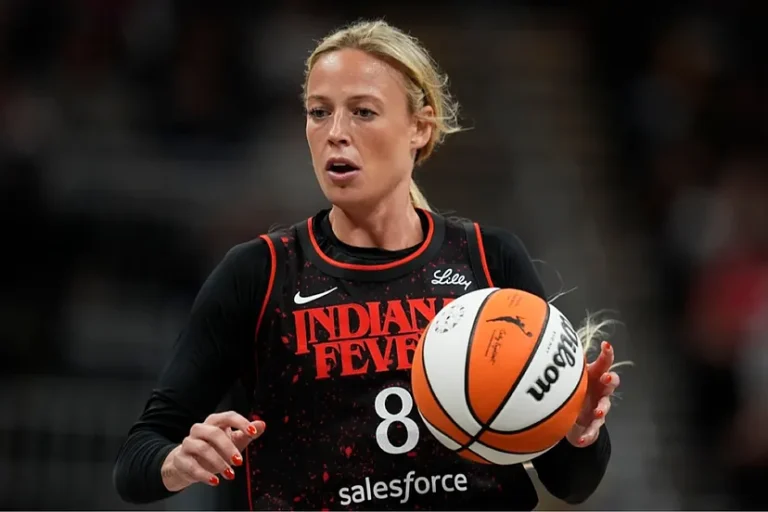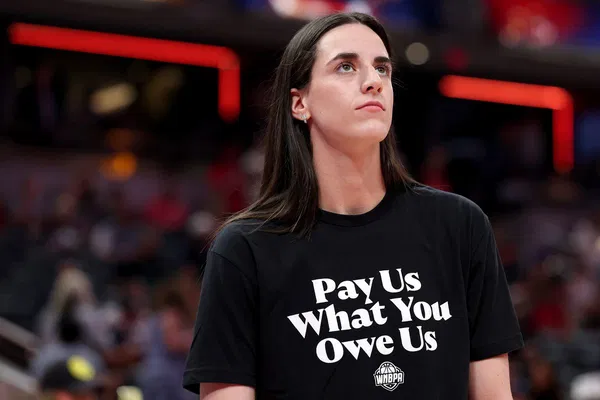
The phrase Caitlin Clark is worth a dog has quickly become a trending topic among Indiana Fever fans and the wider women’s basketball community. The comment, attributed to Indiana football wide receiver Elijah Sarratt, sparked immediate backlash after fans interpreted it as a dismissive and targeted remark toward one of the most influential players in the WNBA. While brief in nature, the statement struck a nerve because of Caitlin Clark’s status as a generational talent and a central figure in the growth of women’s basketball. The reaction was swift, especially on social media, where fans demanded accountability and respect for Clark’s impact on the sport. For many, the issue was not just the words used, but what they appeared to represent.
Caitlin Clark’s rise has been built on record breaking performances, national attention, and tangible growth in viewership and attendance wherever she plays. Since joining the Indiana Fever, Clark has been one of the most talked about athletes in professional basketball, drawing new fans to the WNBA and elevating the profile of the franchise. That context is why the Caitlin Clark is worth a dog comment landed so poorly with fans who view her as a proven professional, not a subject for flippant comparison. To supporters, the remark felt unnecessary and disconnected from the reality of Clark’s influence on the court and beyond. Even neutral observers noted that the phrasing carried implications that went beyond casual banter.
The backlash toward Elijah Sarratt highlights a broader conversation about respect between athletes across sports and genders. Fans pointed out that male athletes benefit from the attention and revenue generated by stars like Clark, especially as women’s basketball continues to expand its audience. The Caitlin Clark is worth a dog phrase became a flashpoint because it contrasted sharply with the professionalism Clark displays in interviews, games, and public appearances. Many fans emphasized that criticism or jokes are part of sports culture, but context and wording matter, particularly when directed at athletes who already face unequal scrutiny. This reaction was less about rivalry and more about standards.
From a team perspective, the Indiana Fever remain focused on basketball, but moments like this underscore how closely Clark is tied to the franchise’s public identity. Every discussion involving her tends to reflect on the team, the league, and women’s sports as a whole. The Caitlin Clark is worth a dog controversy did not arise from on court competition, yet it still reinforces how visible and influential Clark has become. For the Fever, having a player who commands this level of attention brings both opportunity and responsibility. It also shows how invested the fan base is in protecting players they believe are being unfairly diminished.
Looking ahead, this situation is likely to fade in terms of headlines, but the underlying message will linger. Fans expect greater awareness from athletes when speaking about peers, especially those who have reshaped their sport. Caitlin Clark is worth a dog became viral not because fans enjoy controversy, but because many see Clark as a symbol of progress in women’s basketball. The incident serves as a reminder that words travel quickly and carry weight in today’s sports landscape. For Clark and the Indiana Fever, the focus remains on performance and growth, but moments like this explain why her supporters are so vocal.
Comment Section Prompt
What do you think this moment says about how women’s basketball stars are viewed across sports today?
About the Author