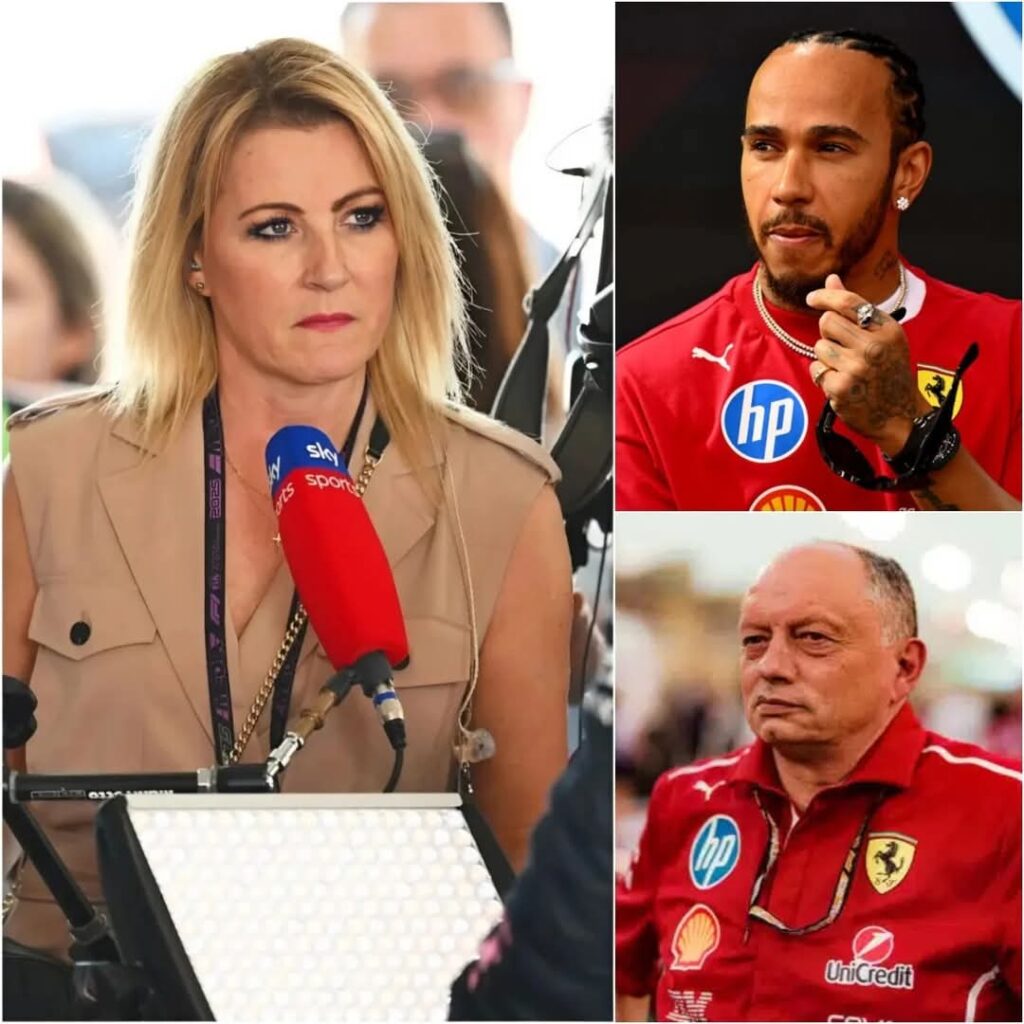
A recent Sky Sports F1 broadcast was overshadowed by a burst of ugly remarks hurled at seven-time world champion Lewis Hamilton while he was giving a live interview. Viewers quickly picked up on the slurs, which cut through the usual paddock chatter and left many stunned that such language still finds its way into the sport’s public arenas.
The presenter conducting the segment did not let the moment slide. Visibly unsettled, they paused the conversation to call out the behavior on-air, labeling the comments “horrible” and “completely unacceptable.” Their firm stance sent a clear signal: bigotry and personal attacks have no place in Formula 1’s ever-growing global stage.
Support swiftly arrived from Maranello. Scuderia Ferrari team principal — equally appalled — issued his own statement condemning the incident. He stressed that respect for rivals is a core value shared up and down the pit lane, adding that such abuse “betrays the spirit of competition” that draws millions to the championship each year.
The episode has reignited discussion about online and track-side etiquette, with fans and insiders urging governing bodies and broadcasters alike to intensify efforts against harassment. Many argue that tougher moderation and quicker sanctions would protect drivers and team personnel who routinely engage with the public under intense scrutiny.
For now, the collective response from Sky Sports and Ferrari signals a united front. Their outspoken rejection of discriminatory language echoes a wider movement within motorsport: fostering an environment where fierce rivalry thrives on talent and strategy — never
About the Author