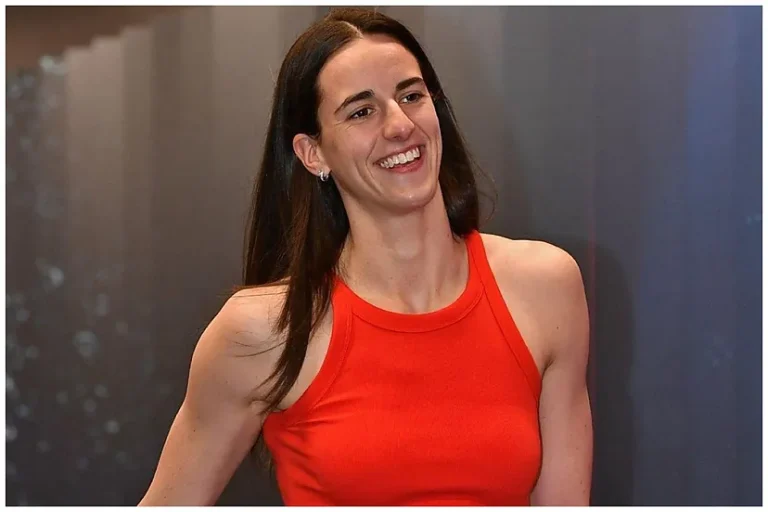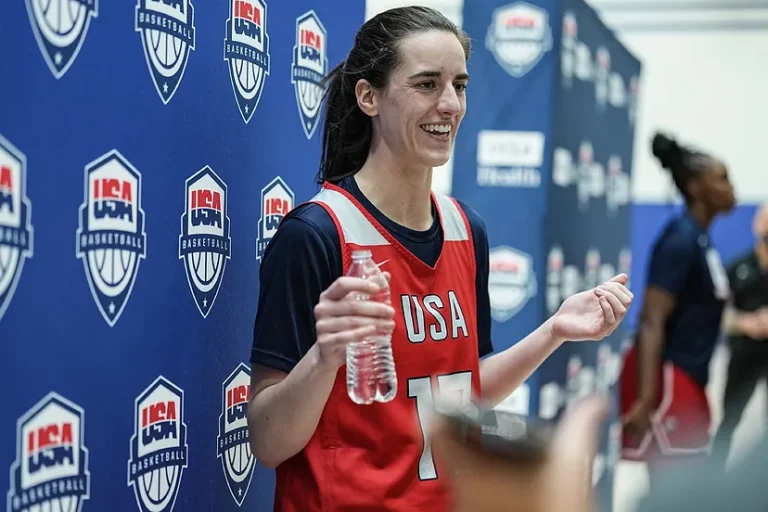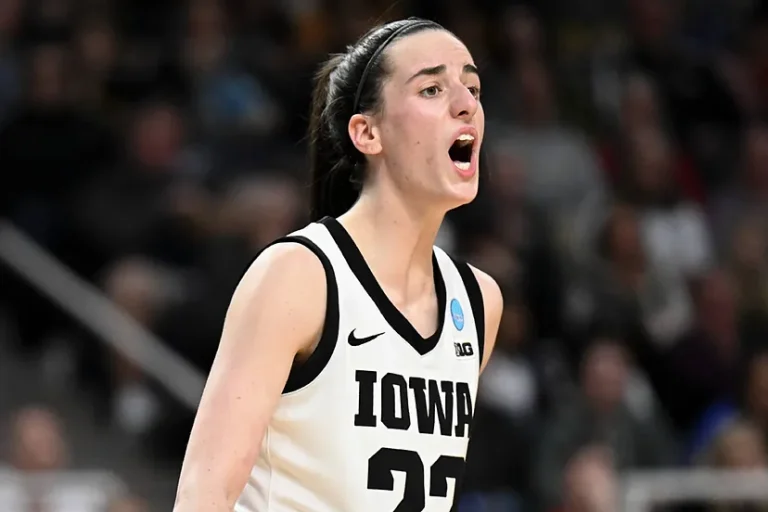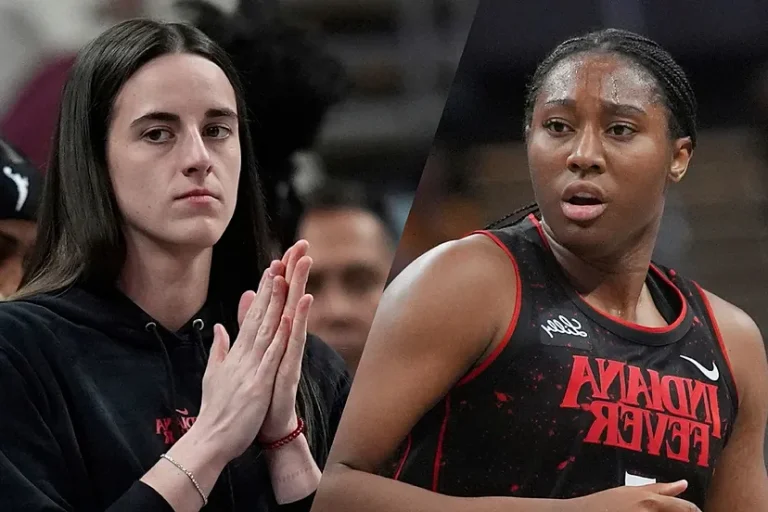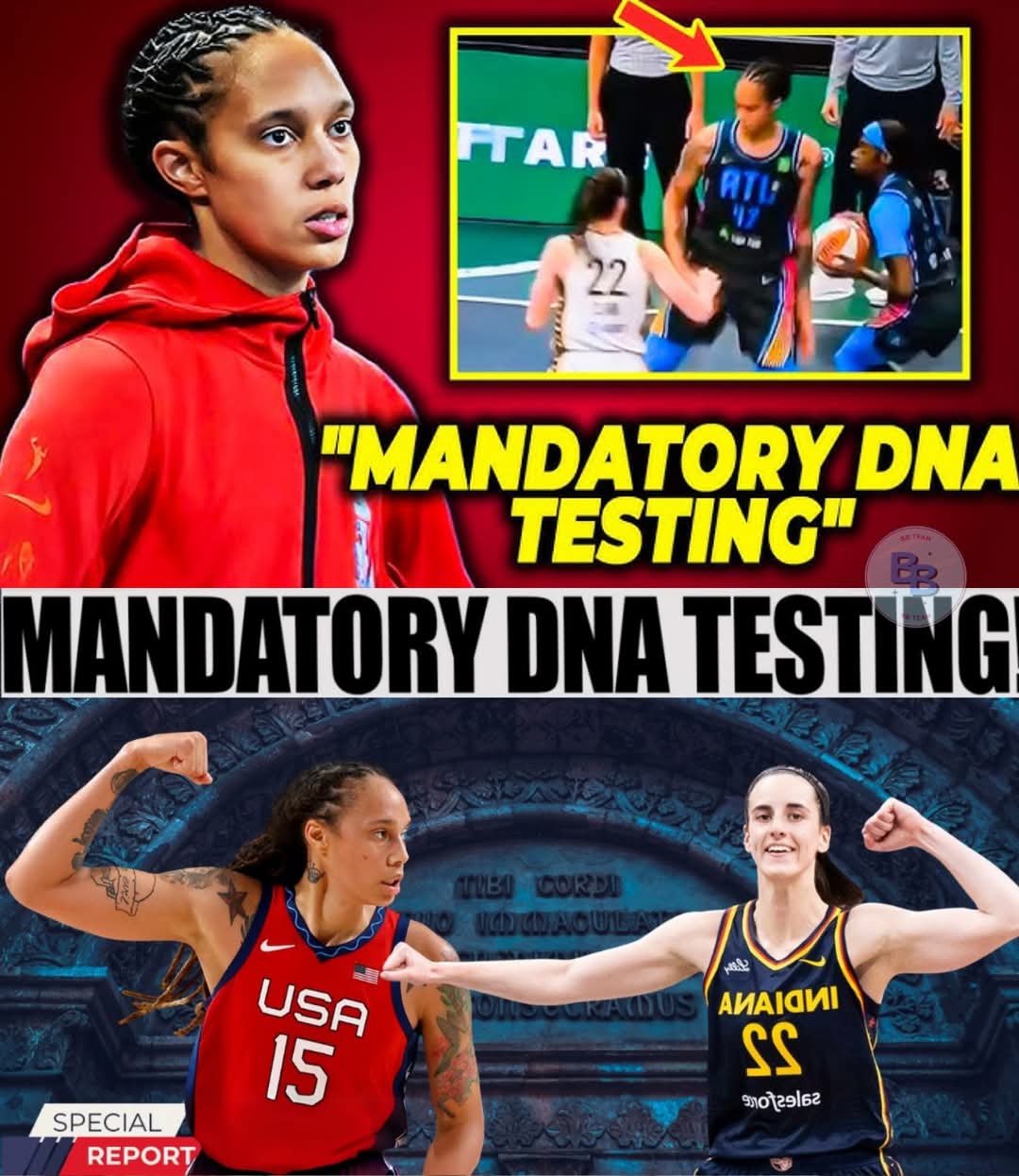
The duel between the Indiana Fever and Phoenix Mercury was meant to be another hard-charging night in the WNBA, yet one mis-step changed everything. Early in the second quarter, rookie sensation Caitlin Clark burst up the floor on a fast break. Phoenix star Brittney Griner, eager to impose her presence, closed in—but her sudden cut sent her skidding to the hardwood, clutching her wrist as the arena fell silent. In a single, awkward fall, a generational clash materialized before a national audience, and Griner’s stumble swiftly came to symbolize a shifting balance of power in women’s basketball.
That slip did not emerge from a vacuum. For weeks Clark’s record-shattering range and blockbuster endorsements had drawn sold-out crowds while also stirring resentment among some veterans who felt her meteoric rise eclipsed their own hard-earned status. Griner, once the league’s unchallenged centerpiece and a global icon after her return from Russian detention, had grown visibly frustrated as the spotlight shifted. The temperatures inside arenas—and locker rooms—were already boiling when the two stars finally met under the brightest lights.
The instant Griner hit the floor, the Internet detonated. Clips of the slip ricocheted across X and TikTok; hashtags like #GrinerSlips and #ProtectClark trended within minutes, while broadcasters’ incredulous gasps looped on sports channels all night. Fans framed the sequence as “basketball karma”: an attempted intimidation that reversed itself in real time, punctuated moments later by Clark’s calm no-look assist for three points. In an era when viral moments rewrite narratives faster than press releases, Griner’s tumble became the day’s defining highlight.
Reaction off the court was just as stark. Younger viewers hailed the scene as proof that a new guard had arrived; longtime supporters of league stalwarts bristled at what they considered an overblown media frenzy. Pundits labeled it the “fall of the old hierarchy,” while the WNBA’s official silence drew criticism from every side—especially from sponsors eager to align with Clark’s soaring popularity. Inside team hallways, insiders whispered that the episode merely exposed a divide that had been widening for months.
All eyes now turn to the July rematch. For Clark, the spotlight feels lighter than the ball in her hands; for Griner, every step will be measured against the memory of that slip. Yet beyond the individual duel lies a larger question: Can the league embrace Clark’s fresh, media-friendly era without alienating the legends who built its foundation? The next meeting between the Fever and Mercury will not just pit two franchises against each other—it will test whether the WNBA can grow without fracturing along its newly exposed fault lines.
About the Author