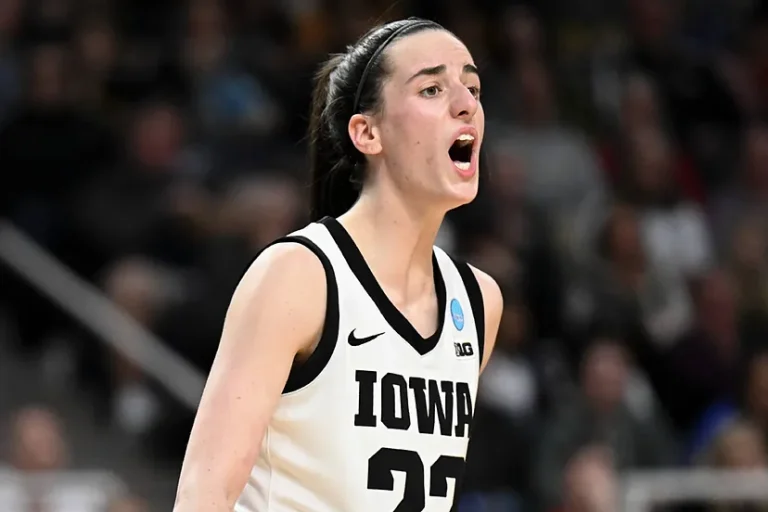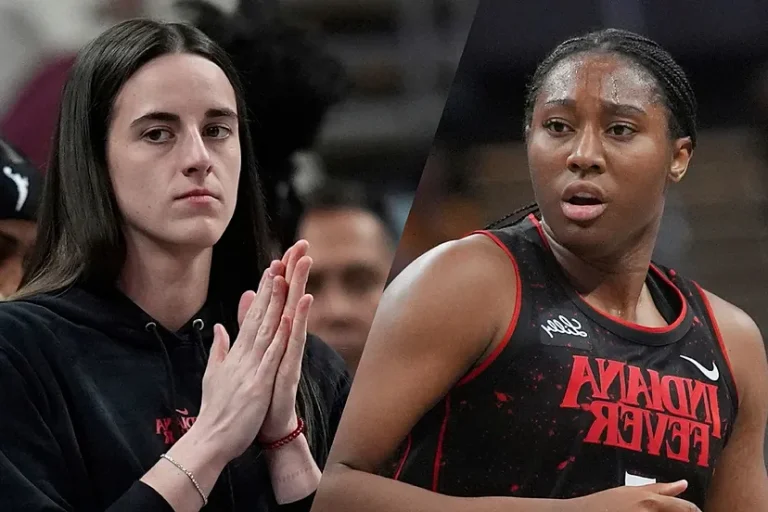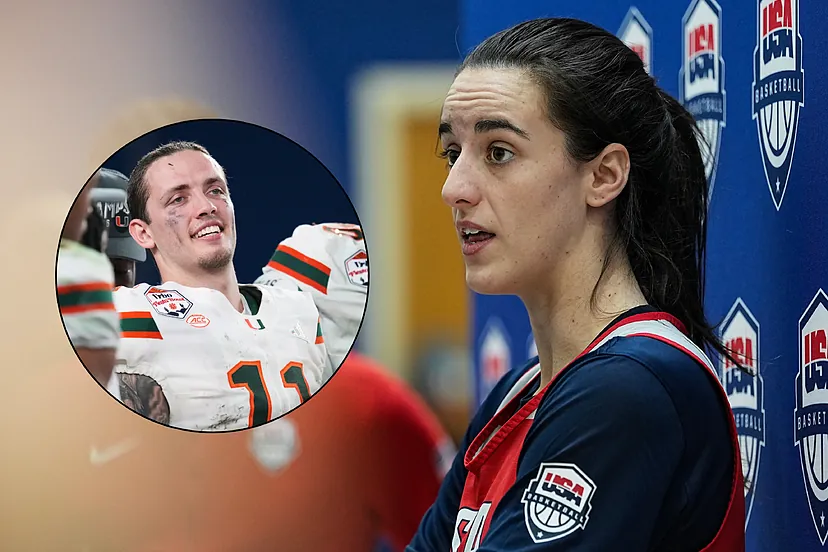
Caitlin Clark helped Miami Hurricanes reach the National Championship through the ripple effect of one of the most talked about performances in women’s college basketball history. During the 2024 NCAA Women’s Basketball Tournament, Clark delivered a dominant 41 point performance against LSU. That game was widely discussed not just for the scoreline but for how it altered the trajectory of multiple players involved. The impact of that night extended far beyond Iowa’s tournament run.
Hailey Van Lith, who guarded Clark for much of that game, saw her season and future shift dramatically after the loss. Following the tournament, Van Lith decided to leave LSU and transfer to TCU in search of a better fit. This move created a roster complication for Haley Cavinder, who had already committed to TCU for the following season. With playing time no longer guaranteed, Cavinder reconsidered her decision.
Haley Cavinder ultimately chose to return to Miami, reuniting with her twin sister Hanna Cavinder and bringing significant NIL value back to the Hurricanes women’s basketball program. The Cavinder twins are among the most influential athletes in college sports marketing, and their presence carries weight beyond the court. Their return strengthened Miami’s brand and visibility across multiple sports. This move also played a role in shaping football decisions.
At the same time, quarterback Carson Beck was preparing to leave Georgia through the transfer portal. Beck had been in a relationship with Hanna Cavinder, and Miami suddenly became a much more attractive destination. The opportunity to start at quarterback, compete at the highest level, and remain close to the Cavinder twins made Miami a logical choice. Caitlin Clark helped Miami Hurricanes reach the National Championship by unintentionally influencing this sequence of decisions.
Beck’s arrival proved crucial for the Hurricanes football program. In his first season with Miami, he led the team with poise and efficiency, contributing directly to their deep playoff run. His game winning performance in the semifinal showcased why Miami took a chance on him. The Hurricanes benefited from both his talent and experience, validating the transfer strategy that brought him to South Florida.
The broader implication of this story is how modern college sports operates as a connected ecosystem. Caitlin Clark helped Miami Hurricanes reach the National Championship not through intention, but through influence. One performance in women’s basketball triggered multiple transfer decisions that eventually strengthened a football roster. This reflects the growing role of NIL, player mobility, and personal relationships in shaping championship level teams.
Comment Prompt
Do you think moments like this show how connected college basketball and football have become?
About the Author