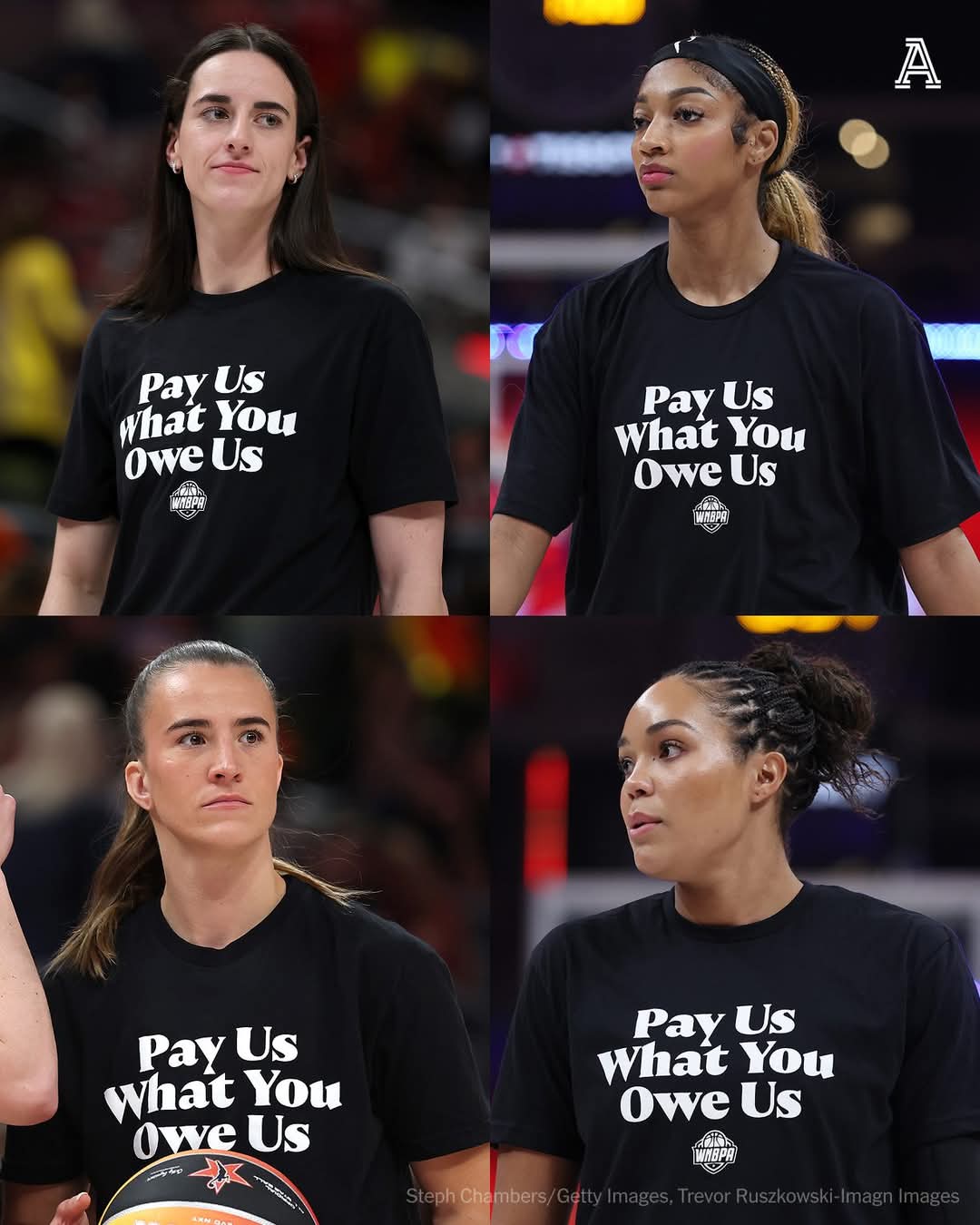
The 2025 WNBA All-Star Game was supposed to be a celebration quickly turned into something bigger. When the league’s top stars stepped onto the court in warm-up shirts boldly reading “Pay Us What You Owe Us,” fans were left with more than highlight plays—they witnessed a moment of resistance that echoed through arenas and social media alike. But what sparked this bold move, and what are the players really fighting for?
In front of thousands of fans and a national audience, WNBA All-Star players used their platform to highlight a very real issue: the fight for fair pay. Wearing black shirts emblazoned with “Pay Us What You Owe Us,” the message was clear and unapologetic. It wasn’t just a fashion choice—it was a protest with purpose.
Just one day before the All-Star festivities, the WNBPA (the players’ union) met with league representatives to revisit financial negotiations. According to sources close to the discussion, the players were met with proposals that felt tone-deaf and underwhelming—especially given the league’s recent surge in popularity, sponsorships, and media coverage. The talks ended without progress, leaving players more frustrated than ever.
This isn’t the first time WNBA athletes have spoken out about their earnings. Despite growing TV deals, merchandise sales, and packed arenas, players often earn a fraction of what their male counterparts in the NBA receive. The league has made strides—like the 2020 collective bargaining agreement—but many players feel those changes aren’t enough to match the value they bring. The gap remains wide, and the message from players is simple: visibility must be matched by investment.
What makes this protest significant isn’t just the salaries—it’s what it represents. These women are using their visibility not just to play the game, but to challenge systems. It’s about respect, acknowledgment, and justice—not just in sports, but in any space where women are undervalued. The All-Star Game served as a global stage, and the message reverberated far beyond the court. It invited fans to not just cheer, but to think and act.
With the players’ message now trending and gaining media attention, all eyes are on the league’s next move. Will the WNBA rework its financial model? Can it meet the rising expectations of the athletes and fans? One thing is clear—the players are not backing down. The path to equity may still be long, but this protest just might be the spark that forces real, lasting change.
Comment Section
What are your thoughts on the WNBA players’ protest? Do you think the league should increase player salaries? Share your opinions in the comments below—let’s talk!
About the Author